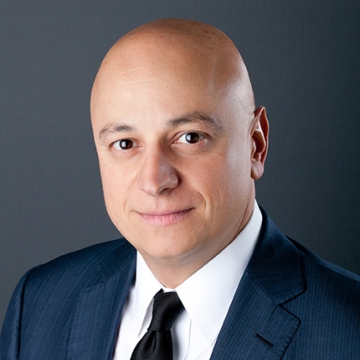
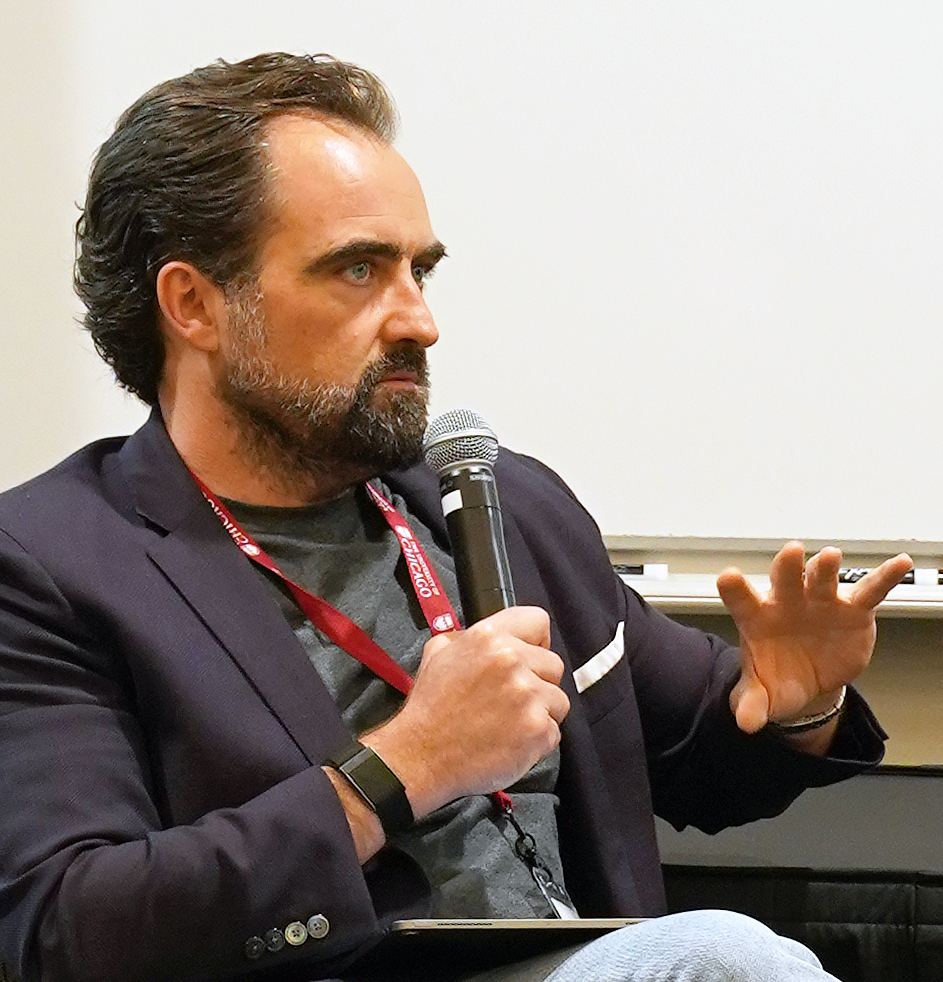
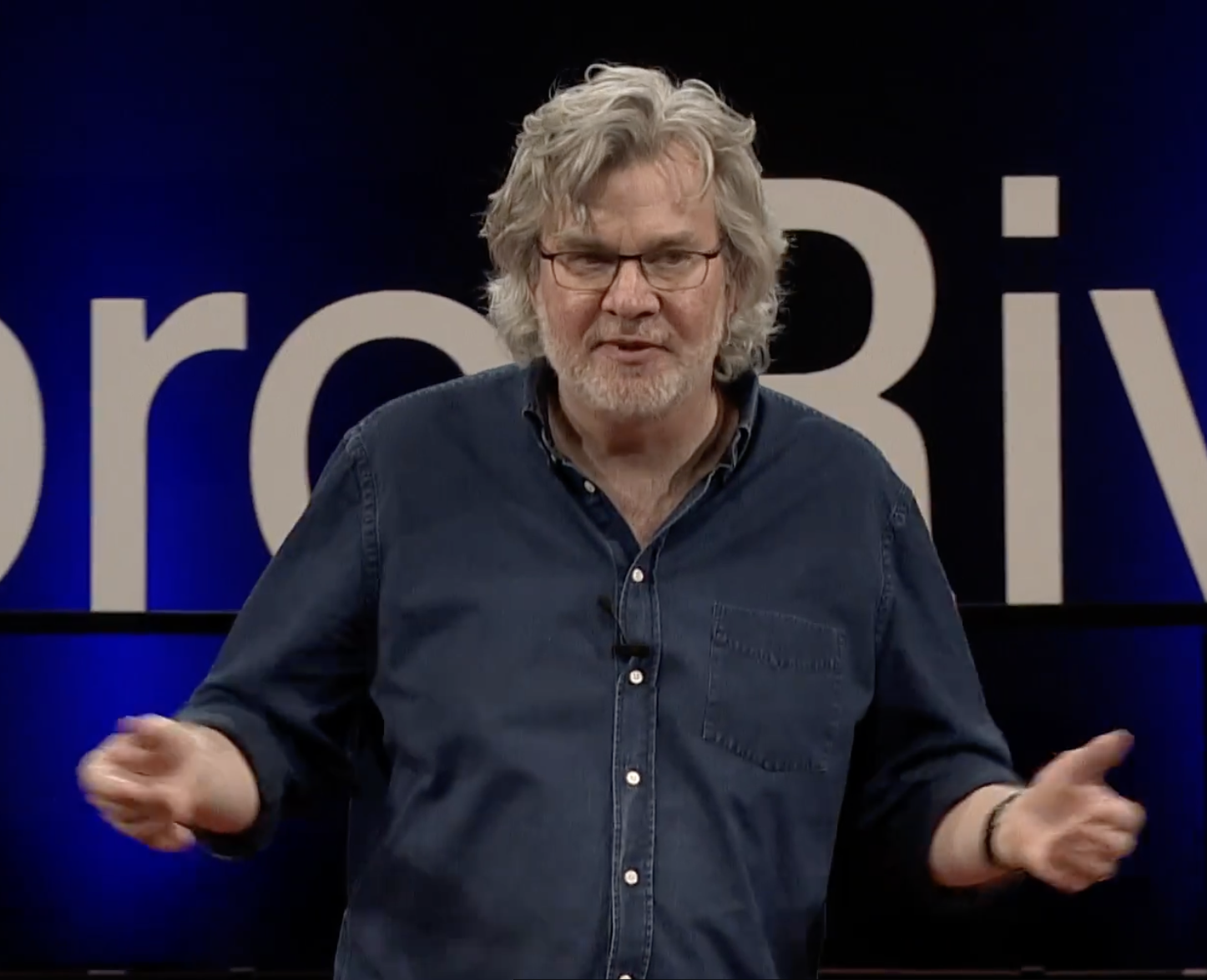
Sergio Corbo, who has spent his career leading commercial organizations at General Electric, Schneider Electric, and Veolia, sees too many companies still unclear on what the CRO role requires. For Corbo, now CEO at Ennovria, who teaches strategic pricing in the Chief Revenue Officer (CRO) Program at the University of Chicago’s Booth School of Business, the key component is starting from the customer, not the company. Put that way, it sounds simple. But few companies actually do it.
“A lot of companies talk about bringing ‘solutions’ to customers,” Corbo says. “But typically, a solution is just a series of things companies have in their drawers. They open their drawers, put things together, and call it a solution. They never start from the customer’s side.”
Corbo’s alternative is what he calls “answers.” These are specific responses to actual customer questions and not just repackaged company offerings. “The customer says, ‘I have a problem. How do I do this?’ Now my job, as CRO, is to answer the entire question and not just bring a partial answer from my drawer. I want to feel the pain that the customer feels, so that I can really figure out how to solve it. If I don’t feel it, I’m not going to be able to do that.”
The CRO role is growing because growth itself has become more complex. Customer journeys are nonlinear, acquisition costs are rising, boards demand predictability, and AI has raised expectations for insight. Organizations increasingly need leaders who can orchestrate growth holistically rather than manage sales in isolation.
Sergio Corbo, MBA, PhD, CRO Instructor
It reflects how profoundly revenue economics have shifted in recent years as their focus has gone from transactional sales to retention, expansion, and lifetime customer value. In the old model, customer pain after the sale was someone else’s problem since the revenue had already been captured. But when most of a customer’s value comes after the initial signature—through renewals, expansions, and referrals—understanding their pain is now central to the whole business model. Thus, the sale is less a closed transaction than a just-begun relationship, one whose worth you’ll have to prove every quarter.
“The CRO role is growing because growth itself has become more complex,” Corbo says. “Customer journeys are nonlinear, acquisition costs are rising, boards demand predictability, and AI has raised expectations for insight. Organizations increasingly need leaders who can orchestrate growth holistically rather than manage sales in isolation.”
Orchestrating that complexity can’t be rooted simply in playbooks and memorized answers. It requires better and more precise questions, which is why Corbo’s classroom approach is distinctly Socratic.
“The very first thing I tell them is, we’re going to do this together, because I’m one of you,” he says. “I am just the facilitator. I am not the one with the answers.”
When you’re completely lost, you want something simple to restart from. The curriculum in Booth’s CRO program incorporates proven go-to-market frameworks and diligence methodologies adapted from consulting work, but they are redesigned for operators. These tools are pragmatic and application driven. They are meant to be used immediately in leadership roles, not just discussed in theory, so that, as you rebuild, adding real-world experience, that’s where the magic happens.
Sergio Corbo, MBA, PhD, CRO Instructor
The stance surprises some students, who often arrive as already accomplished leaders—with fortified opinions and urgent problems—looking for immediate paths forward. “They’re very good at telling you the problem,” Corbo says. “They can do that in a minute. And then they want to know why they’re doing hours of class when the teacher should just give them the answer.”
But—similar to successfully dealing with customers in the business world—just handing over solutions would defeat the purpose, according to Corbo. “Although I might have some of those, that’s not why I’m here,” he says. “The most relevant thing is: what answer are you going to find with the tools that we’re going through together? Your answer may be even better than mine.”
Corbo uses The Karate Kid as his surprising touchstone. “You show up wanting to learn karate, and I’m teaching you how to wax the car and paint the fence. Eventually, you know karate.” His strategic pricing course covers canonical frameworks—price elasticity, value-based pricing, willingness-to-pay analysis—not just as playbooks to follow but as anchors to think from.
“They’re good anchors, but they are a simplification of reality,” he adds. “When you’re completely lost, you want something simple to restart from. The curriculum in Booth’s CRO program incorporates proven go-to-market frameworks and diligence methodologies adapted from consulting work, but they are redesigned for operators. These tools are pragmatic and application driven. They are meant to be used immediately in leadership roles, not just discussed in theory, so that, as you rebuild, adding real-world experience, that’s where the magic happens.”
The ultimate emphasis Corbo brings to class centers on creating value rather than capturing it. Despite teaching strategic pricing, he describes himself as “the anti-greed teacher.” In concentrated markets, he notes, companies can force customers into unfavorable pricing situations. “It’s who has the knife on the handle side,” he says. His point is that it’s shortsighted to use that leverage. “If you’re actually thinking on behalf of the customer, your business is a lot more sustainable in the long term.”
And yet most organizations are still overinvesting in acquisition while under-managing expansion, churn, and pricing leakage. Revenue cannot be managed in silos. Fragmented ownership leads to local optimization and inconsistent outcomes, which is exactly what the CRO role is designed to solve.
Sergio Corbo, MBA, PhD, CRO Instructor
When companies abuse their market power, Corbo argues, corrections eventually come. “If you’re not true to the customer, the customer will find ways—or society at large will find ways—to make your abuse not sustainable,” he says. “Markets that are too consolidated will eventually be deconsolidated.”
The flip side is knowing where to actually create value. For Corbo, life cycle management becomes a capital allocation problem. With customer acquisition costs climbing across many B2B sectors, the old model of dumping resources into new logos while neglecting already existing customers no longer makes economic sense. “And yet most organizations are still overinvesting in acquisition while under-managing expansion, churn, and pricing leakage,” Corbo notes. “Revenue cannot be managed in silos. Fragmented ownership leads to local optimization and inconsistent outcomes, which is exactly what the CRO role is designed to solve.”
Under his framework, there’s a harder question leaders have to ask: Where does each incremental dollar actually create the most value? Sometimes that’s in acquisition. But increasingly, it’s in retention, expansion, and the compounding effects of customer lifetime value. That’s why metrics like net revenue retention have become central to how investors evaluate businesses. “Everything starts from the customer and builds all the way up,” he says, adding that parts of the logic can seem almost counterintuitive at times: “Growth doesn’t come from selling more. It comes from deciding what not to sell.”
In the end, Corbo believes that the Chicago Booth Chief Revenue Officer (CRO) Program delivers the necessary fundamentals: systems thinking, data-driven judgment, and cross-functional leadership. But more importantly, it teaches executives how to expand into real-world messiness and then simplify back to something manageable and executable.
“Chicago Booth doesn’t tell you what to think,” Corbo says. “It teaches you how to think. If you’re ready to lead growth in complexity, challenge assumptions with data, and build a revenue engine that delivers predictable results, this program will fundamentally change how you lead.”
Become A CRO Who Defines Revenue Success
Develop leading-edge insights on revenue and growth to outpace the competition.