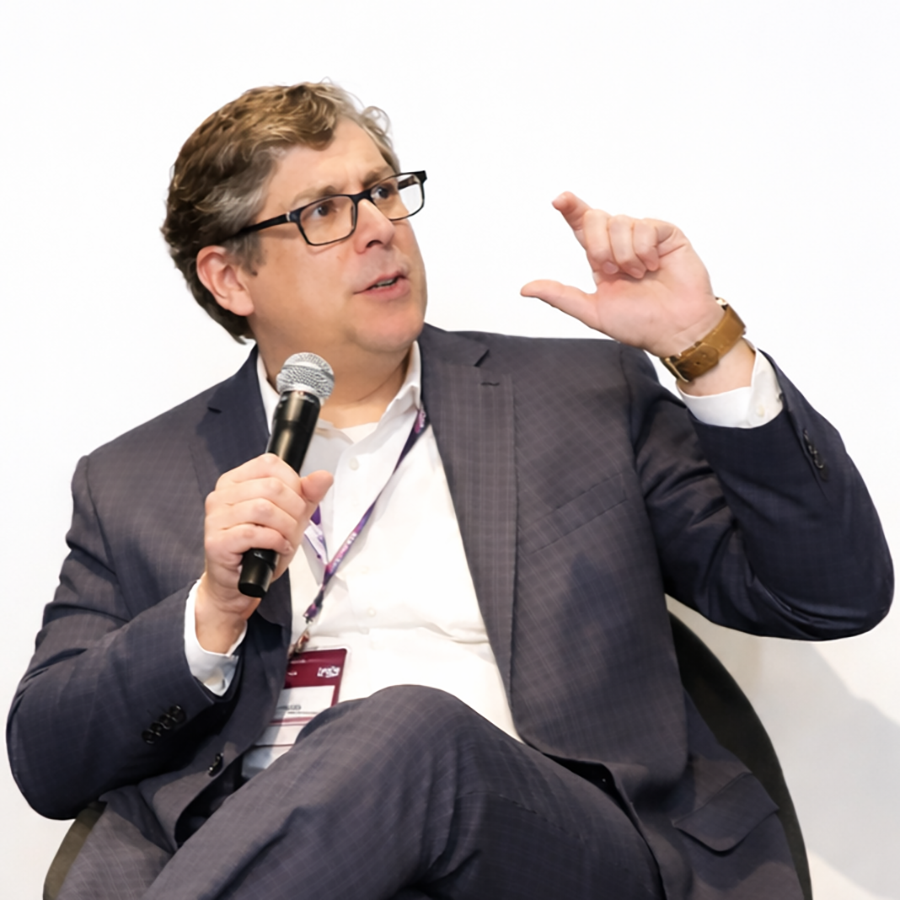
“People underestimate the value of a CRO who knows how to speak in the language of a board or an investor,” says Chris Trendler. As former head of portfolio talent at Madison Dearborn Partners, Trendler oversaw management team strategy across thirty-two portfolio companies spanning technology, healthcare, industrials, and financial services. The work taught him how boards evaluate the executives responsible for growth.
That perspective is what Trendler, who continues to advise Madison Dearborn Partners and other investors as a founding partner of Pendra Group, brings to the Leading with Boards and Investors course in the Chief Revenue Officer (CRO) program at the University of Chicago Booth School of Business. The course addresses a blind spot he’s seen over and over again: Most CROs come up through sales knowing pipelines, conversion rates, and territory management. Less often known is how investors interpret that information. What are their fiduciary duties? How do they see their role in the business? What are they actually listening for?
Their lens on how to operate the business may be too high level or not relevant to the situation at hand. The reality is they’re looking for information from the management team, and they’re hungry for that.
Chris Trendler, CRO Instructor
The course opens by demystifying what boards and investors do. Through case studies—including GoDaddy’s 2012 pivot from web hosting to ancillary services—participants learn to read businesses the way private equity firms do by identifying the metrics that matter and the assumptions that drive valuations, while also keeping tabs on the important sources of risk. The goal is for participants to understand what’s happening on the other side of every board presentation.
The misconceptions participants bring to class become perfect jumping-off points. Some assume boards are filled with seasoned operators ready to tell them exactly how to run the business. In fact, Trendler notes that most board members are investor types. “Their lens on how to operate the business may be too high level or not relevant to the situation at hand,” he says. “The reality is they’re looking for information from the management team, and they’re hungry for that.” Other CROs assume investors only care about cutting costs: they’re focusing on turnaround situations but overlooking key aspects of the broader landscape. Venture capital, growth equity, and many private equity funds are focused on expansion, so understanding what kind of investor you’re dealing with, and what their mandate is, changes everything when it comes to how you communicate.
A really good CRO asks: What feeds into customer lifetime value and acquisition cost that I can actually commit to? What do I have to estimate? And what signals will tell me over the next few quarters whether we’re on track?
Chris Trendler, CRO Instructor
The key is building what Trendler calls a “narrative using metrics.” That means knowing where you have precision and where you don’t, and then producing a credible story that acknowledges uncertainty while also showing you understand the underlying business. “The patience for people who are hand-waving their way through success is very, very low in that context,” he says. “An overarching strategy is important, but how that actually translates to the numbers and actually flows into a budget that will lead into profitability—that’s what they want to see.”
The role of the CRO is just like any other sale. Understand your customer—which in this case is a board or investor—and then make sure the way you interact with them and your relationship-building aligns with who those people are as individuals.
Chris Trendler, CRO Instructor
For Trendler, the CRO role is also a natural launchpad. “It’s one of the most fertile grounds for a future CEO,” he says. “You’re already thinking like one—just more growth-centric than cost-centric.” The program accelerates that path by forcing participants to look past execution and consider the full range of stakeholders they need in their corner.
Having taught several cohorts, Trendler has watched participants take this investor lens back to their companies. He receives calls from former students who’ve been offered CRO roles and now want to evaluate the opportunity more strategically. “Not only is their opportunity set increasing,” he says, “but their sophistication in the way they pursue these opportunities is increasing. That’s a good thing for them and for the businesses they might be leading.”
In the end, the value of Booth’s Chief Revenue Officer (CRO) program has two essential elements for Trendler: opening the aperture on what revenue leadership actually requires, and building a network of people wrestling with the same challenges. “These are like-minded individuals,” he says. “They want to be CROs, they have the skill sets, and they want to get really good at it. That shared ambition makes the peer learning more relevant and immediately useful.”
Don't Just Study the Playbook. Learn to Write Your Own.
Join the Chicago Booth Executive Education's Chief Revenue Officer (CRO) program and receive a comprehensive learning experience designed to give you the skills and knowledge needed to outperform again and again.